



Staytight Fence Strainer Assemblies
Full End Assemblies
Fence strainer assemblies and strong strainer posts are critical in any fence line. It is vital you get a strong end assembly that lasts.


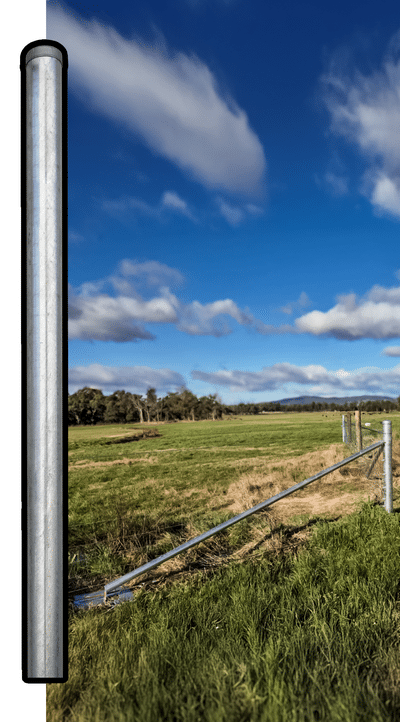
Drive-Tight® Hand-Driven End Assembly Kits
Our most popular, and fastest to install end assembly. Fences up to 1200 and 1500mm high.
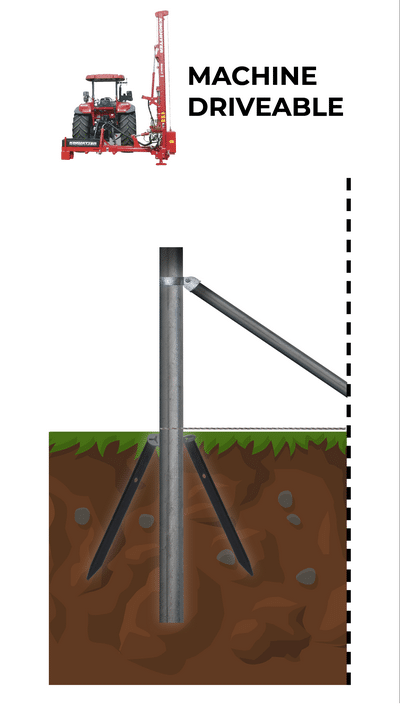


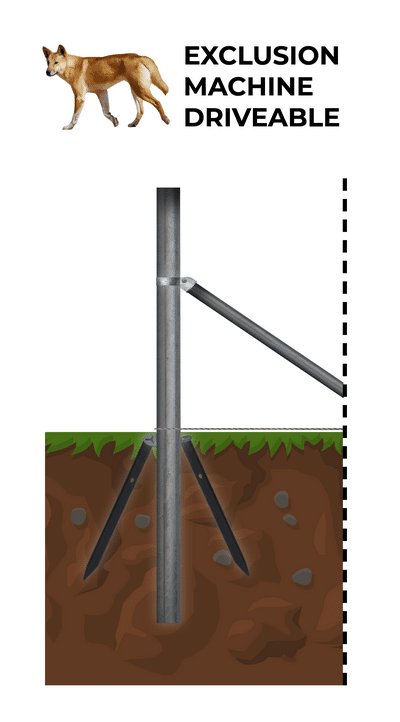

Exclusion
Fence End Assembly Kits
Australia’s strongest, largest and most adjustable assembly. Fences up to 2000mm high.
Stay Kits
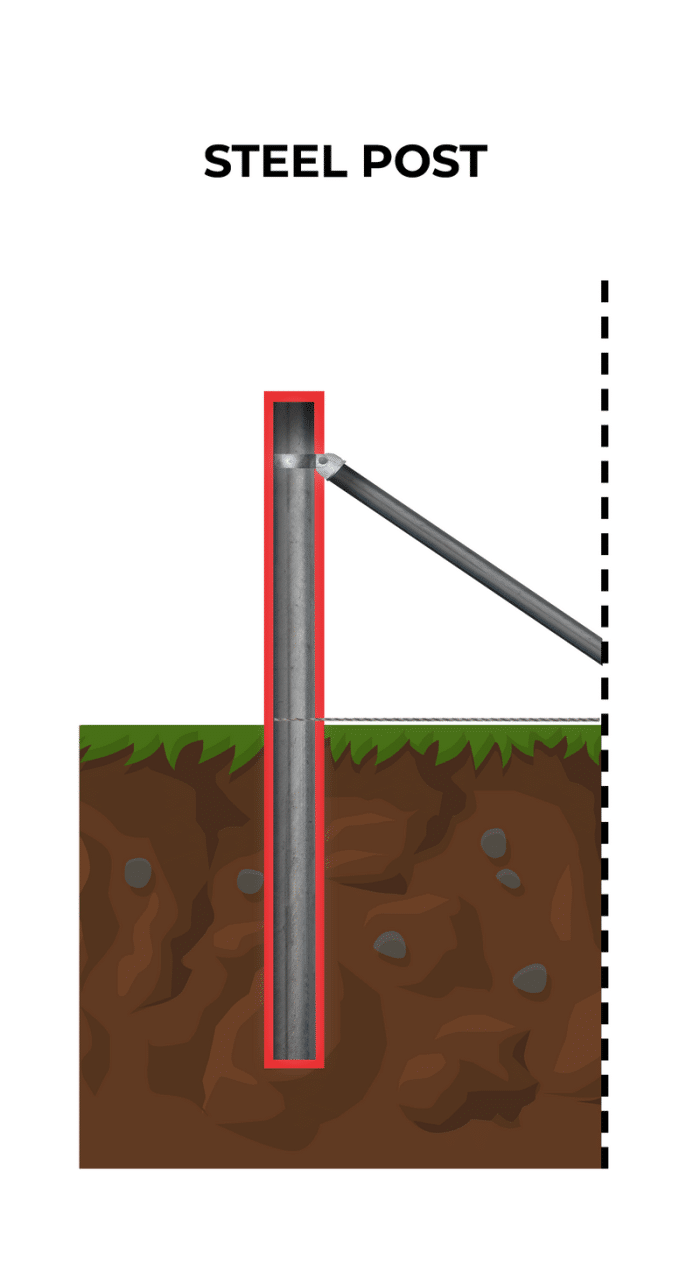
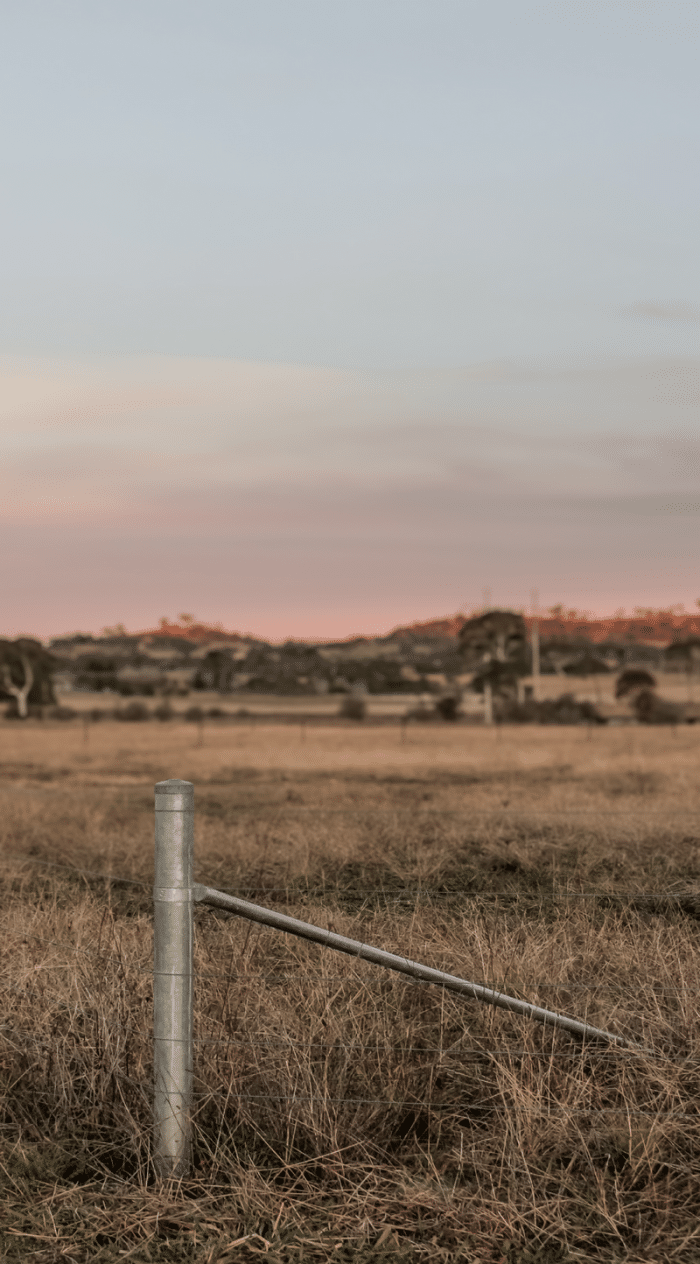

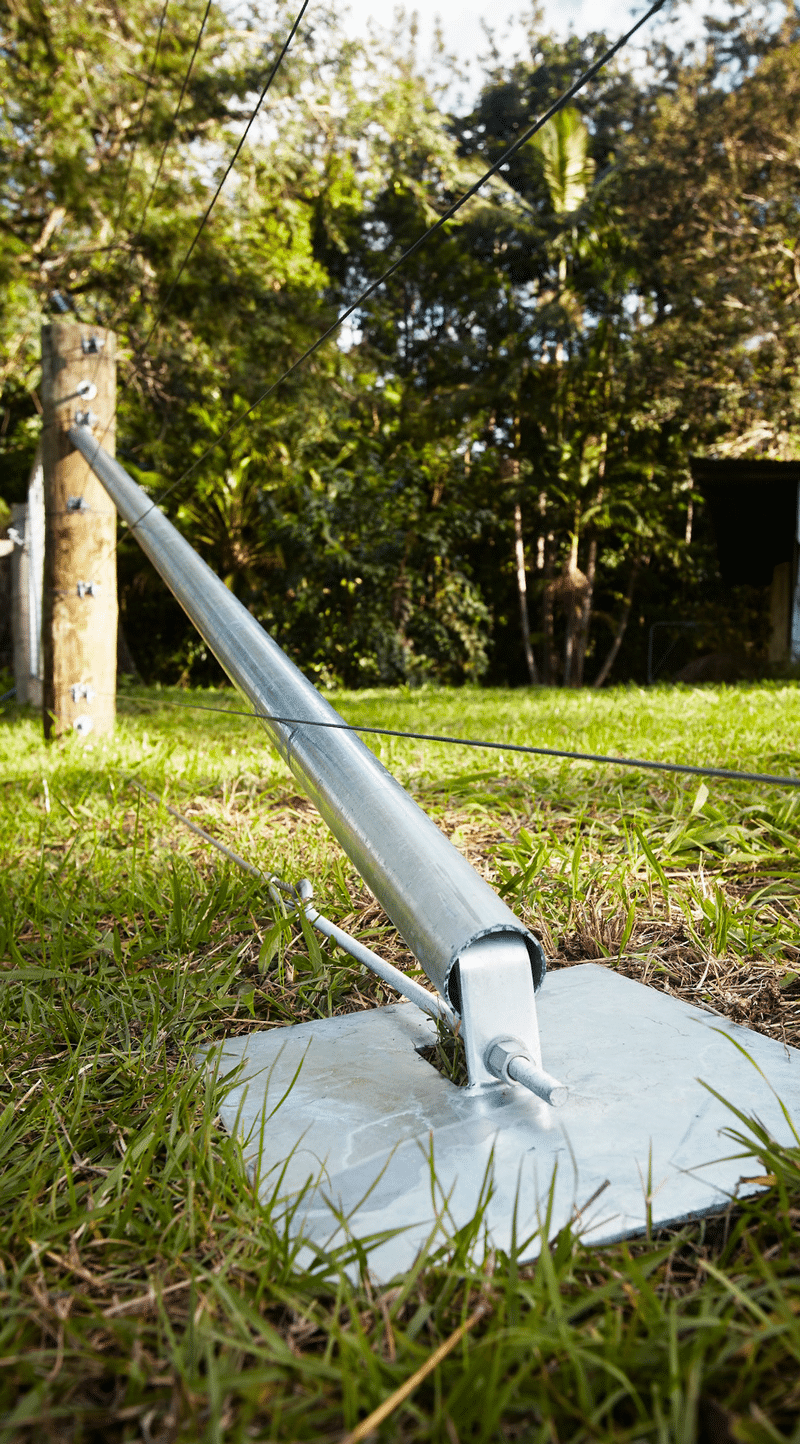
Pine Post Stay Kits
Our pine post stay kit makes putting together a new strainer assembly simple and fast.

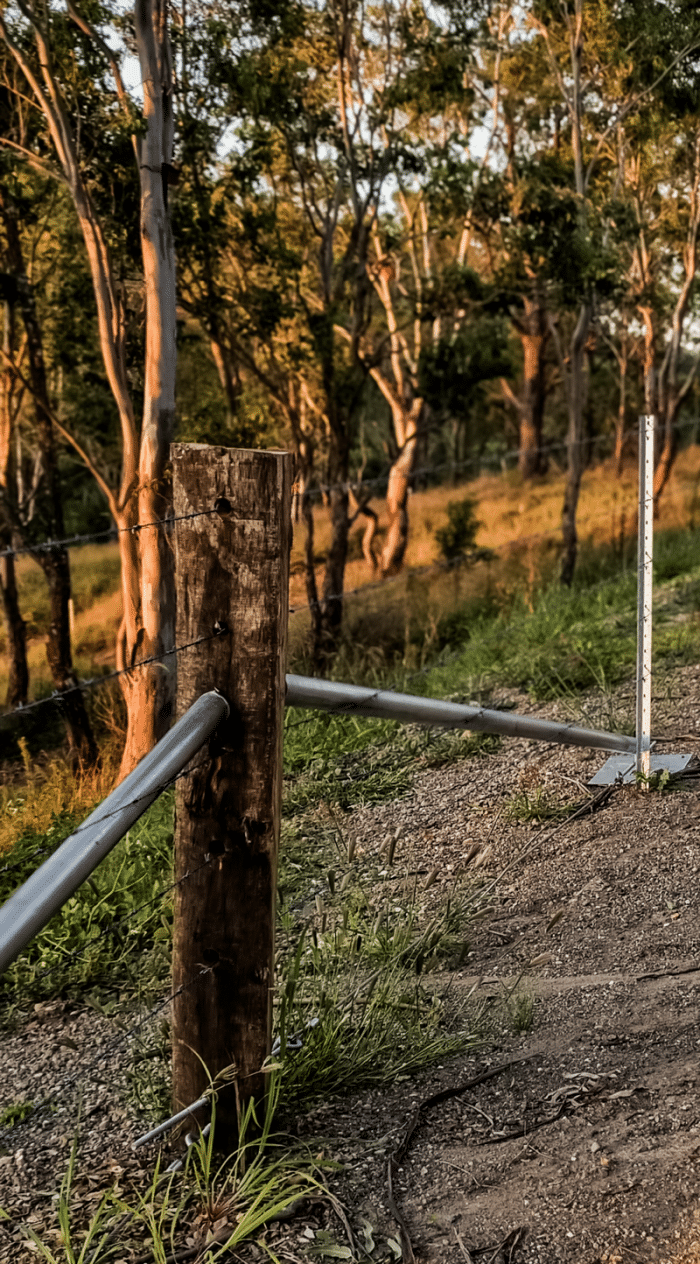
Timber Post Stay Kits
Our timber post stay kit makes putting together a new strainer assembly simple and fast
need help choosing the right end ASSEMBLY?
Download a digital copy of the StayTight End Assembly Selection Guide to make your job easier.
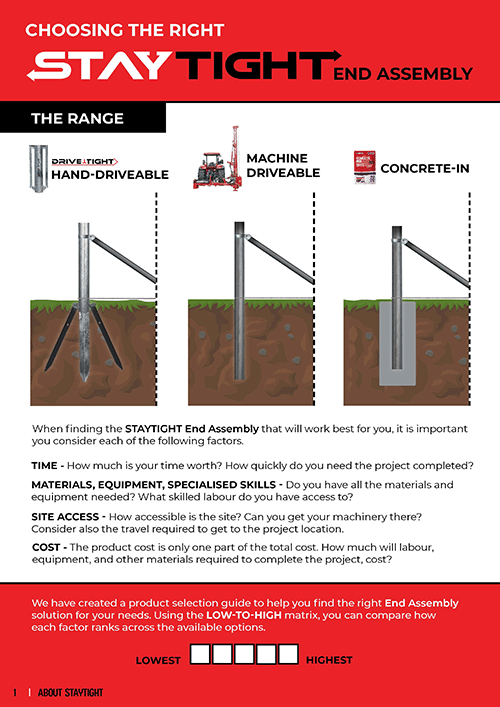
All of our unique end assembly designs are fully adjustable, quick to install, and designed for strength and reliability.
Our range of StayTight end assemblies are one of the most versatile and rust resistant assemblies on the market. All of our products are hot dipped galvanised to ensure you have a product that lasts.
Fitting Kits & Accessories


Fitting Kits
Our fitting kits are perfect for when you already have your own posts and stays.
View Details
Twist Tight Post & Stay Connectors
Heavy-duty galvanised Twist-Tight post and stay connectors.
View Details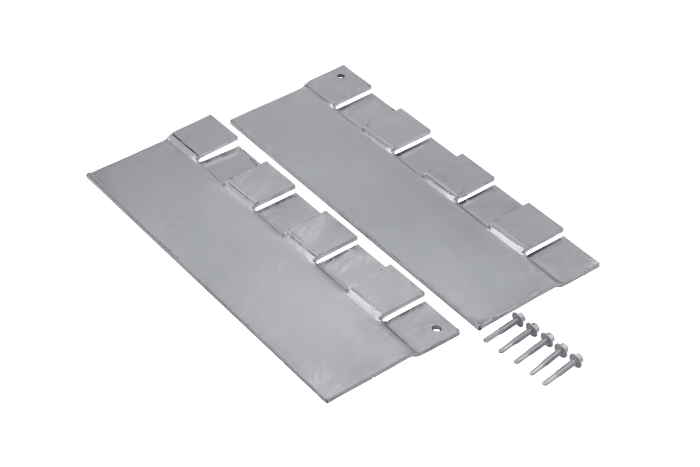
Mud Plate Attachment
Extra surface area for your floating footplate in wet, boggy ground.
View Details
Strainer Posts
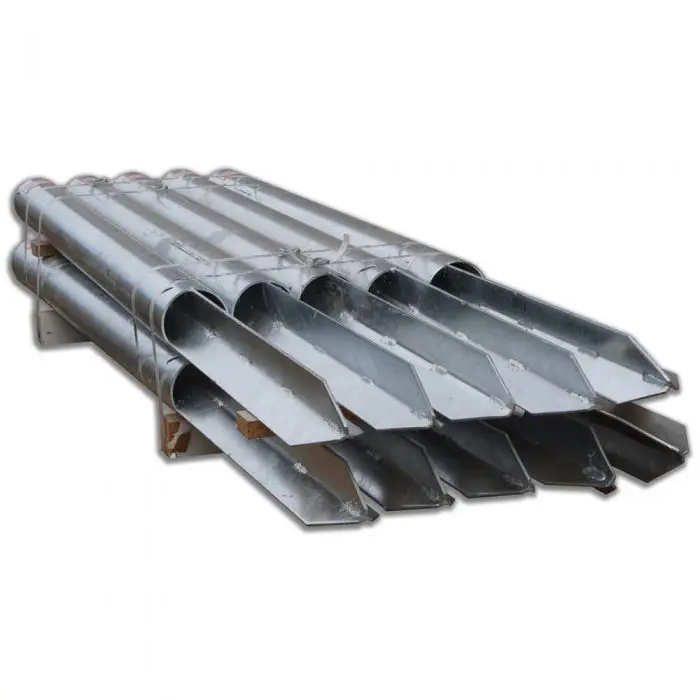

Upgraded
THE ORIGINAL & BEST JUST GOT BETTER
NOW INCLUDED IN ALL PREMIUM STEEL POST KITS!
Includes:
— 2 X LOKDOWN LUGS
— 7 X TEK SCREWS
* per assembly kit (5 kits per tub)
Also available separately to add to any kit
Patent Protected

Customer Feedback


MORE GROUND ANCHORAGE FOR A STRONGER STRAINER POST
When it comes to end assemblies, you want something that's built to last. Rotech Rural's LokDown Lugs give our posts 8 times more ground anchorage than regular posts, so they can handle any kind of soil (even deep black soils), flood-prone areas or rocky terrain. You can trust that your end assemblies will stay put, no matter the conditions. Plus, the larger ground anchorage can support heavier strains without shifting or leaning. With LokDown Lugs, you can have peace of mind knowing your fence is going to stay put.
Why Choose a Floating Footplate?
A strong and reliable fence is crucial for the safety and security of your livestock and property and the strength of your fence starts with your end assembly.
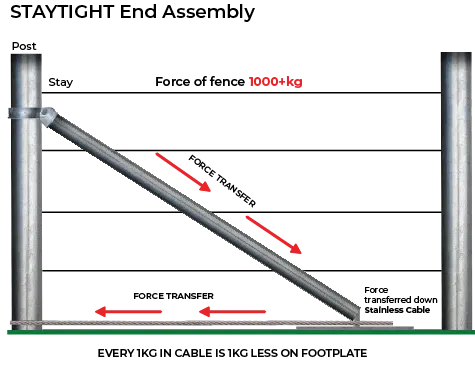
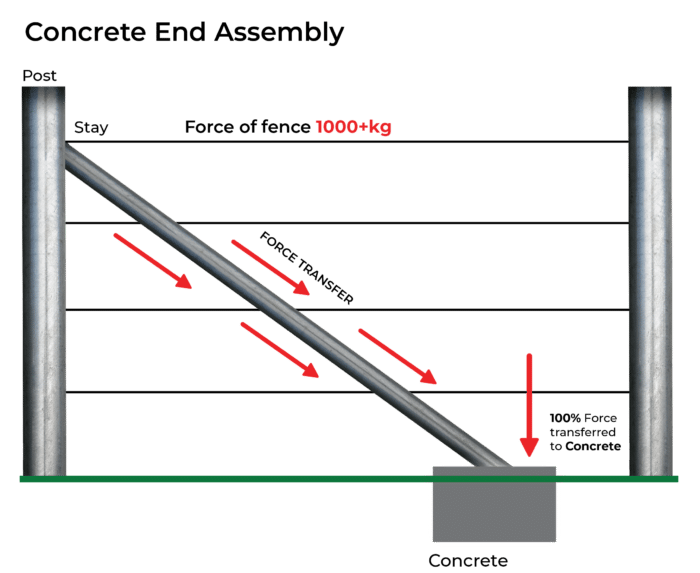
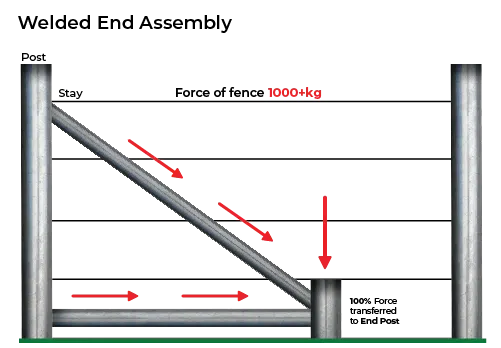
An end assembly with a floating footplate can reduce post pull-out, maintain tension for longer, and perform better in challenging soil conditions. It ensures the load from your fence ends up at the post where it should be. Read the full article to find out more about choosing the right end assembly and the advantages of Rotech Rural's floating footplate and tension cable design.
The StayTight Book
Download a digital copy of the 2026 StayTight Book to see how our StayTight End Assemblies can make your job easier.

Customer Feedback
Feedback On Our End assEmblies, Fitting Kits & Accessories
Need Answers?
Frequently Asked Questions About End Assemblies
Can't find what you're looking for? View all FAQs or get in touch.
Yes. End assemblies and gate hardware are the highest-value upgrades on an existing fence, and both retrofit without rebuilding the line. Replacing a failed timber or welded assembly with an adjustable StayTight assembly takes under 15 minutes once the old one is out. And an existing assembly that’s started to move can often be saved as it stands: LokDown Lugs retrofit to pin the post down with two half-length star pickets, adding around eight times more ground anchorage from there on.
A steel post system set to the right depth for its soil, with adjustable, hot dipped galvanised end assemblies and gate hardware. The galvanising stops rust for decades, and steel stands through the white ants and grass fires that end timber fences. If the ground moves an end assembly over time, an adjustable assembly can be re-straightened in minutes instead of rebuilt.
Rotech Rural products are stocked by 900+ stockists across Australia. Use the stockist finder on the website to find your nearest one. For accurate pricing and availability, submit a quote request through the website.
Download the free StayTight End Assembly Selection Guide from the Rotech Rural website. It matches the right kit to your fencing job.
Yes. Every StayTight end assembly is hot dipped galvanised and run with a stainless steel cable, making it one of the most rust-resistant assemblies on the market and built to last in tough rural conditions. The Premium Stainless Steel Kits go a step further with a stainless eyebolt, so any future adjustments stay easy even in highly corrosive environments. The thread will last. Want a hand matching a kit to your conditions? Call the office or jump on the web chat.
LokDown Lugs are a ground anchorage accessory that give StayTight posts up to 8 times the holding power of a standard post. They earn their keep in deep black soils, flood-prone country, and soft reactive soils, where post movement is a real risk.
StayTight and MULTI-STAY kits come in a range of types to suit whatever you’re straining off: steel, timber, pine or concrete posts, depending on what you’d rather use for your strainer posts. They run from fitting kits, if you’ve already got your own posts and stays, right through to complete kits that include a steel straddle post in a range of sizes for standard farm fencing and exclusion fencing.
A StayTight end assembly kit includes everything you need to build a strong, fully adjustable fence strainer assembly. Depending on the kit, that means a strainer post, cap, stay, TWIST-TIGHT stay connectors, footplate, and tension assembly.
The StayTight system handles it with four things working together: the floating footplate spreads the load, the tension cable lifts most of the weight off the footplate, Mud Plates add surface area where it’s still not enough, and LokDown Lugs give the post eight times more grip in the ground than a regular post.
For the full breakdown, read how end assemblies work.
A fence starts losing tension within 24 hours of going up. It keeps losing tension for the rest of its life. Adjusting the tension cable lets you put it back.
Timber assemblies, welded steel, and stays concreted into the ground can’t be adjusted. Once they’re set, they’re set.
No. The tension cable does the work. It takes as much as two-thirds of the fence’s weight off the footplate and pushes it back down through the strainer post. That’s what keeps the footplate up AND what keeps the strainer post in the ground.
The Mud Plate is for the few paddocks where the ground still can’t carry the remaining third.
Because the ground moves. The strainer post is the only part of an end assembly that should be fixed in place. Everything else has to be free to move with the seasons.
Pin the footplate down, whether that’s concreting it in, welding it to a stake or driving a pin through it, and the whole weight of the fence ends up sitting on the footplate. That’s how end assemblies fail.
Yes. Concrete pads are expensive, heavy, and slow to install. They also pin the footplate down, which kills the floating design the whole assembly relies on. A pair of Mud Plates adds 66% more surface area, screws on in minutes, and keeps the footplate doing its job.
Yes. The plates screw onto the existing footplate with Tek screws. No welding, no drilling, no flame.
That’s also how you reset a failed post without rebuilding the whole assembly. Take the pressure off with a winch or loader, straighten the post, fit the plates, and reset it properly.
No. The standard floating footplate handles normal ground on its own. That’s what it’s built for. Fit Mud Plates only where the ground needs more: wet corners, boggy patches, flood country, irrigation bays.
Over the past five years, we’ve dealt with some severe droughts and major flooding events across Australia. We’ve picked up a ton of knowledge by seeing which fences held up and which ones didn’t.
In reactive soils, black & deep soils, flood-prone areas, and drought- affected soils, it can be very challenging to fence and prevent posts from dislodging, popping out of the soil, or moving around. The best solution to reducing this movement is to provide additional ground anchorage.
Ground Anchorage refers to the depth and strength at which a post is secured into the ground. By providing additional anchorage, and distributing the external forces applied to the end assembly over a larger volume of soil the stress and pressure on the strainer post is reduced. This helps ensure that the soil can support the external forces without allowing any movement.
That is why we have created LokDown Lugs, which provide 8x more ground anchorage, this patent-protected addition makes our end assemblies the strongest yet!
The best way to install a strainer post is to drive it in. This method causes the least disturbance to the soil. A steel strainer, either 80NB or 100NB, driven in will outperform a much larger timber post that has been dropped in a hole and backfilled.
Driven posts have a greater holding capacity and are far less affected by vertical and horizontal movement.
Yes, the tension cable transfers the weight to the base of the strainer post, where it’s most needed. Without the tension cable, the weight of the fence falls on the footplate.
The cable reduces the chances of the post lifting out of the ground. In addition, with all the weight taken off the footplate, it’s unlikely for it to sink.
Within 24 hours of a fence being erected, it starts losing tension, and this continues throughout its lifespan. Adjusting the fence allows you to respond to changes in the fence line before they become problematic.
StayTight assemblies give you control over the adjustment via the tension cable, post, and stay connectors. This is not possible with traditional timber assemblies, steel assemblies that are welded, or assemblies that have their stay buried in the ground. A well-maintained fence line will give you many years of service, so having control over it is essential. By doing so, you can avoid letting nature dictate its condition entirely.
It is not very important (within reason). While some people believe that a greater diameter will provide a stronger hold in the ground, what is more important are the depth of the post and the way it is installed.
The stay plays a critical role in the holding power of the assembly. As a general rule of thumb, your stay should be at least 2.5 times the height of your fence. For example, if your fence is 1.2m high, your stay should be at least 3m long (the longer the better). The calculation is: fence height (1.2m) x 2.5 = stay length (3m).
Ground movement is unavoidable and out of our control. The only element that should be fixed is the strainer post. All other components should be allowed to move with the changing conditions the fence is exposed to.
The footplate is “floating” because it remains on top of the ground, unpinned. Pinning it down, burying it, or restricting its movement defeats its purpose and creates problems. All the weight of the fence will end up on the footplate, exactly where it shouldn’t be. A stay that’s set into the ground, even with a backing plate, will fail over time, causing the entire fence to fail.
Another advantage of a floating footplate is that it doesn’t require digging for installation. Not only is it superior to other footplates, but it’s also a real time and back saver.
The optimal height for the stay is ¾ of the way up the post, measured from ground level. For example, if your post is 1.2m above ground level, the best position for the stay would be 900mm. (1.2m x 0.75 = 0.9m or 900mm). With the StayTight system, there is no fixed height for the post, giving you full control.
If the angle of the stay is too flat or too steep, it can act as a fulcrum and increase the vertical movement of the post, which is not desirable.
If they fail, the entire fence fails. Strainer posts are subject to vertical and horizontal forces, which is why it’s critical that they’re installed correctly. The deeper the post is set, the greater its load capacity. For example, a post set at 1m (42″) has about double the capacity of one set at 750mm (30″).
End assemblies are required when there is a change in the direction of the fence, a change in the topography of the land, or a gateway.
Diagonal steel stay assemblies are the easiest, quickest, and strongest assemblies you can install. They are also fully adjustable.
Yes, the flexibility and adjustability of the system allows the kit to be used in rough or steep terrain. If more adjustability is needed than what is available on the 600mm eye bolt, the cable can be slip-knotted around the post and looped to shorten it further on very steep gradients.
WE ARE ONE OF AUSTRALIA’S FASTEST GROWING RURAL FENCING BRANDS.
We supply and manufacture high-quality, innovative, reliable and affordable rural fencing hardware. We believe in our rural fencing products so much that we have a 100% satisfaction guarantee.
But what makes our products different from other farm fence hardware is our commitment to creating fencing solutions that save you time, last longer, look great and outperform other hardware.
We supply everything you need to get your farm fences sorted, from fence posts to tools, and everything in between. If you can't find what you're looking for contact us. Our team is happy to help!